Nestlé’s AI Content Engine Is Bigger Than a Marketing Tool
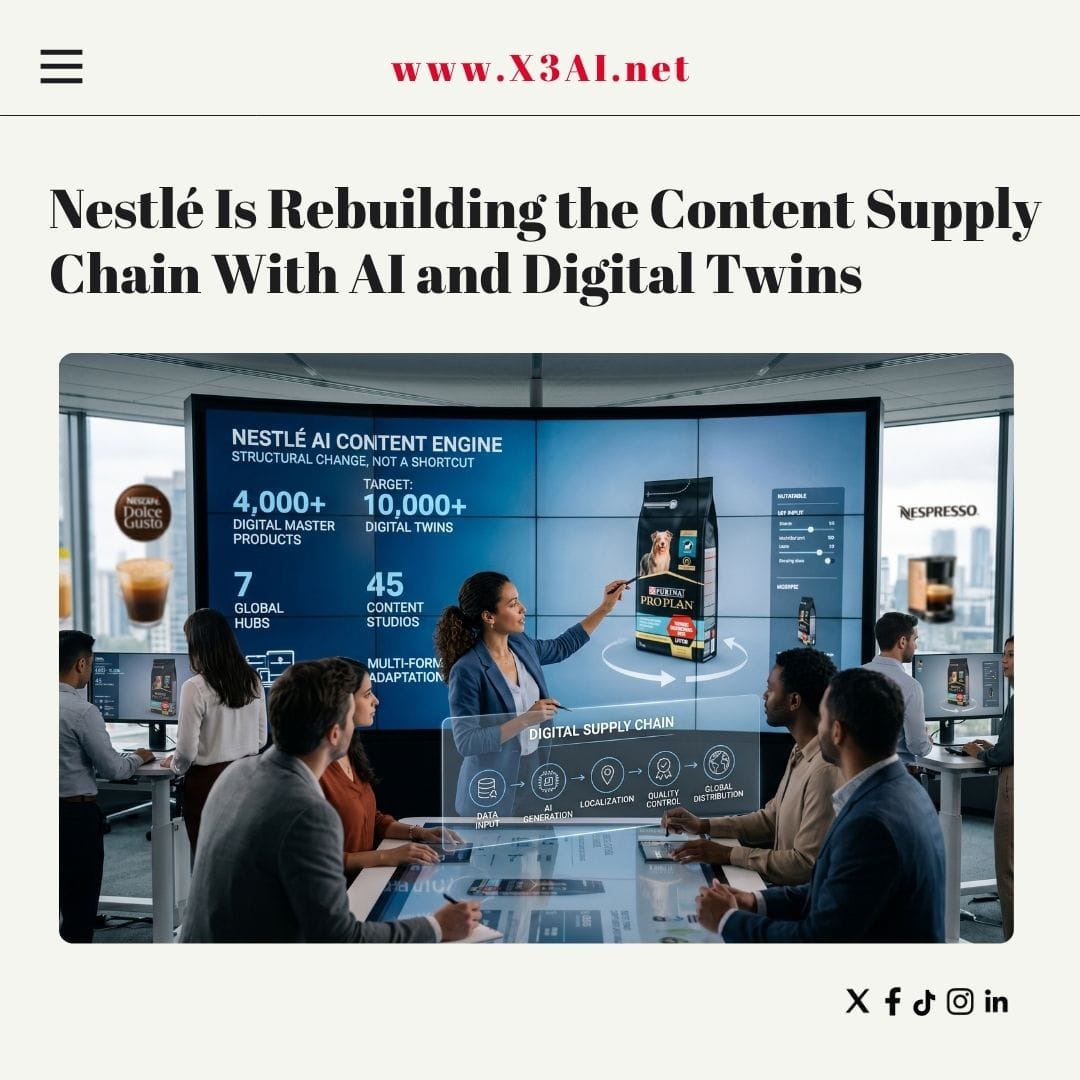
Nestlé’s latest AI move should not be read as a clever creative shortcut. It is a structural change in how a global brand manufactures marketing content. In June 2025, the company said it launched an in-house AI-powered content service that uses digital twins to generate high-quality product visuals for brands including Purina, Nescafé Dolce Gusto, and Nespresso across eCommerce and digital media. The system is built on NVIDIA Omniverse and OpenUSD, with Generative AI support from NVIDIA AI Enterprise, developed with Accenture Song and hosted on Microsoft infrastructure.
That matters because Nestlé is not experimenting at the edges. It is operationalizing AI for one of marketing’s most expensive and repetitive pain points: creating product content fast enough for modern digital commerce. Nestlé says the service lets teams localize packaging, adapt assets for seasonal campaigns, and fit channel-specific formats without reshooting from scratch. The company also says online campaigns now often require six or more ad formats to perform effectively, making content volume and versioning a real production bottleneck, not just a creative one.
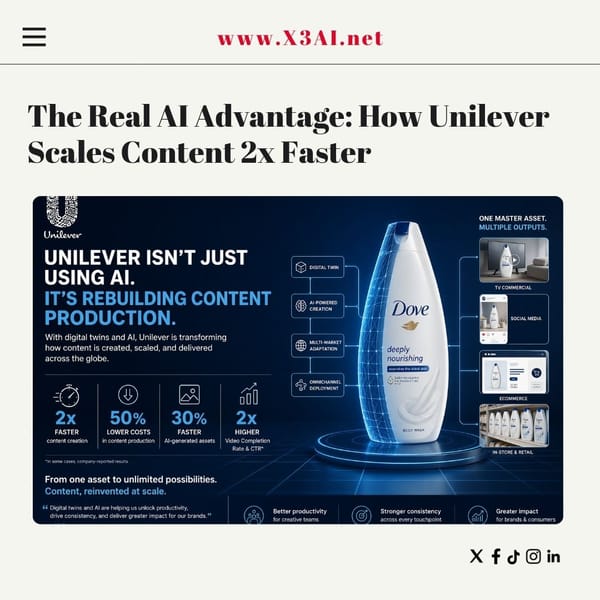
The deeper story is that Nestlé is shifting from a photography-based content model to a data-and-asset model. Digital twins are exact 3D virtual replicas of physical products, which means the product becomes a reusable digital source of truth. Once that base asset exists, marketers can create new environments, angles, formats, and localized variants far more efficiently than with traditional shoots. That does not just reduce cost; it changes the economics of personalization, speed to market, and asset consistency across regions and channels.
Nestlé’s own scale figures show why this is strategically important. The company says it already had a baseline of 4,000 3D digital master products, mainly for global brands, and wants to reach 10,000 digital twins across global and local brands within two years. It also says the new service cuts the time and cost of scaling digital twins by more than 70%. Those are not small workflow improvements. They point to an enterprise content infrastructure designed to serve a multinational brand portfolio, not a limited pilot in one business unit.
There is also an organizational clue in how Nestlé described the rollout. The system is being put into the hands of Nestlé’s Integrated Marketing Services organization, which includes 250 marketing experts across seven marketing hubs, alongside 45 content studios worldwide. That suggests the company is building a distributed production model in which AI is embedded into the daily content supply chain, rather than being isolated inside a central innovation team. That is usually where enterprise AI becomes durable: when it is tied to operating workflows, budgets, and delivery teams. This last point is an inference, but it is strongly supported by the scale and structure Nestlé disclosed.
This is also a more mature AI-in-marketing use case than many headline-grabbing generative AI experiments. Pure text or image generation can create speed, but it can also introduce brand inconsistency and factual drift. Nestlé’s approach is more controlled because the visuals are anchored to exact 3D replicas of real products. In practice, that means the AI layer is being applied on top of a governed asset foundation. For large consumer brands, that is often the more commercially valuable path: less novelty, more reliability. This is an inference from the technical setup Nestlé and NVIDIA described.
The broader market context makes Nestlé’s move look even more consequential. McKinsey estimates generative AI could create $0.8 trillion to $1.2 trillion in productivity across sales and marketing, and specifically estimates 5% to 15% productivity gains in marketing from use cases including personalization and content creation. McKinsey also reported that marketing and sales was the business area where generative AI adoption jumped the most from 2023 to 2024. Nestlé’s rollout fits that pattern almost exactly: it applies AI not to abstract innovation theater, but to a function where content volume, speed, and personalization directly affect revenue performance.
What makes this especially important for eCommerce is that product imagery is not decorative anymore. It is part of the conversion engine. Search visibility, click-through, retail media effectiveness, mobile display optimization, PDP performance, and regional compliance all depend on having the right asset in the right format at the right time. Nestlé’s annual report reinforces that this service is meant to help marketing teams create content faster, more economically, and at scale as part of a broader push to improve brand-building effectiveness and ROI.
The most interesting takeaway is not that Nestlé is using AI. Many companies are. The real signal is that Nestlé is turning AI into marketing infrastructure. By combining digital twins, standardized 3D product masters, cloud delivery, and global content operations, it is creating a system that can continuously produce brand-accurate assets across channels and markets. In other words, Nestlé is not just automating content creation. It is redesigning the content supply chain.
Key takeaways
- Nestlé’s rollout is a concrete AI-in-marketing use case tied directly to product pages, ads, and digital brand presence.
- The company is using digital twins, not just generic image generation, which gives it a more controlled and brand-accurate content pipeline.
- Nestlé says it already has 4,000 digital master products and aims for 10,000 within two years, showing this is an enterprise-scale system.
- The service reportedly reduces time and cost to scale digital twins by more than 70%, making faster localization and multi-format adaptation economically viable.
- This is less about flashy AI and more about building a reusable content operating model for modern commerce. That conclusion is an inference, but it is well supported by Nestlé’s disclosed structure, partners, and scale.