From Venice to Tribeca, AI Film Festivals Are Turning Generative Tools Into a Storytelling Test Lab
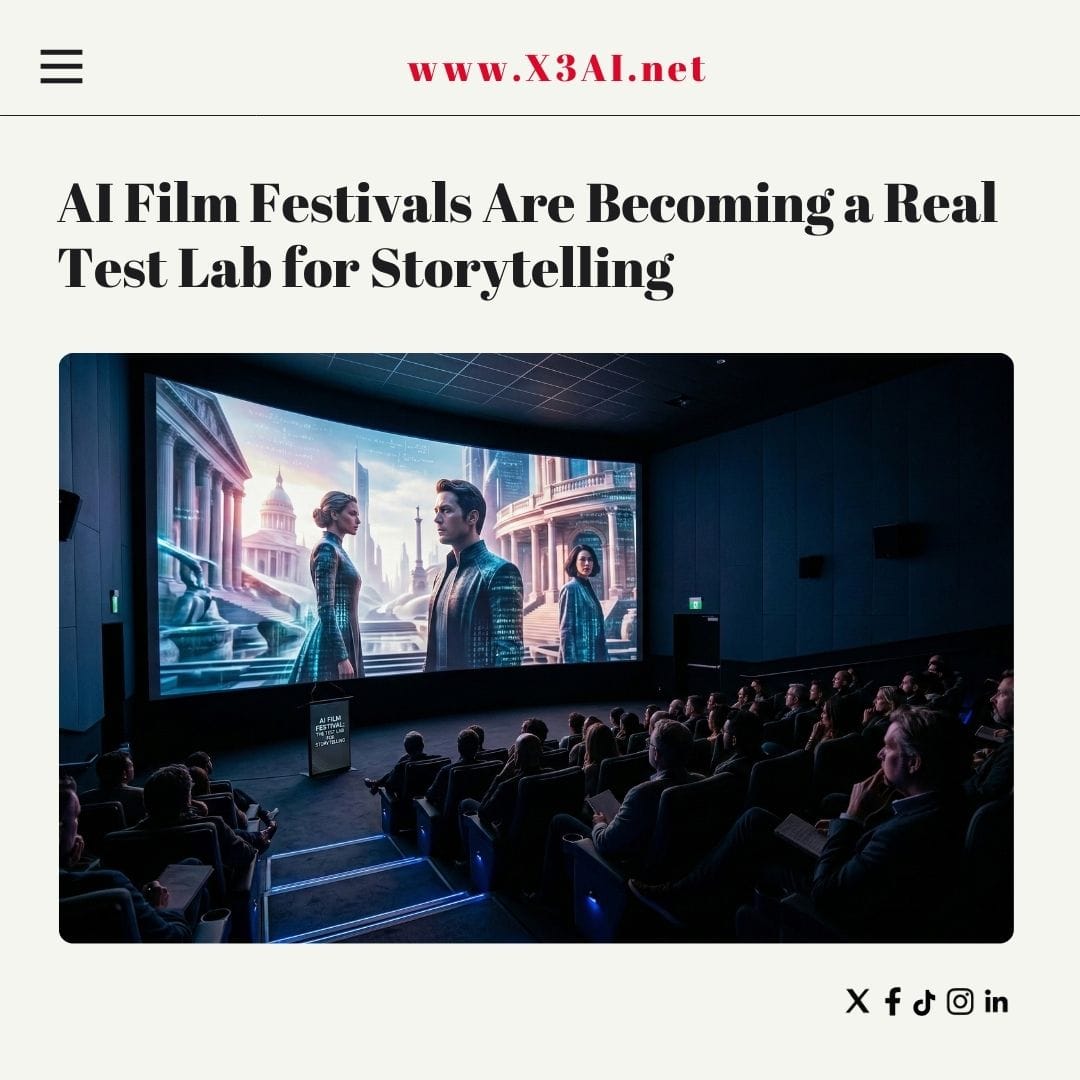
What once looked like a fringe experiment is starting to look more like a new production layer. AI-focused film events are no longer limited to tech demos or online curiosities: Runway’s AI Festival, launched in 2022, has expanded beyond film into design, fashion, advertising and gaming, while the Reply AI Film Festival was created to connect AI talent with the global film industry and explicitly invites creators to use AI in scripts, storyboards, imagery and visual effects. (aiff.runwayml.com)
The strongest signal may be where these works are showing up. Tribeca’s 2025 program included ANCESTRA, presented as the world premiere of a film created in partnership with Google DeepMind and described by Tribeca as the first in a series of shorts exploring AI’s role in filmmaking. The festival also featured The Innocence of Unknowing, an AI archival project examining decades of U.S. mass-shooting news coverage and using AI as a collaborator in live performance and analysis. That matters because it places generative tools inside a major cultural institution, not just inside a niche competition. (Tribeca)
The shift is not only aesthetic; it is practical. Reuters reported in February 2026 that Curious Refuge, an online academy focused on AI-assisted filmmaking, has drawn 10,000 students, with 95% of current students coming from entertainment or advertising, and now offers instruction in 11 languages across 170 countries. That is less a sign of casual curiosity than of a workforce trying to build fluency in tools that are already entering production pipelines. (Reuters)
There are also concrete examples of AI being used in large-scale media production rather than speculative prototypes. Reuters reported that “The Wizard of Oz at Sphere” involved Warner Bros., Google and more than 2,000 collaborators, with AI used to enhance the 1939 film’s image resolution, restore visual detail and extend frames for the immersive venue. Crucially, Reuters also reported that the original vocal performances remained unaltered and that the project operated under strict rules that kept the training data confined to that production. (Reuters)
As these tools move into real workflows, the institutions around film are adjusting too. In April 2025, the Academy said generative AI and other digital tools “neither help nor harm” a film’s Oscar chances, while also stating that voters should consider the degree of human creative authorship. The Writers Guild of America, meanwhile, says its 2023 MBA established AI protections making clear that AI is not a writer and that AI-generated material cannot be treated as literary material in ways that undermine writers’ compensation or credit. (press.oscars.org)
The broader media business is moving in the same direction. Deloitte’s 2025 media outlook says social platforms are extending generative AI capabilities to creators and advertisers, and argues that AI can both strengthen large incumbents and empower smaller creators. In that context, AI film festivals are becoming more than showcases. They are early indicators of how storytelling, production, distribution and authorship are being renegotiated in public. The most credible takeaway is not that AI is replacing filmmakers; it is that AI-assisted storytelling is becoming a real, visible part of how media is made, tested and discussed. (Deloitte)