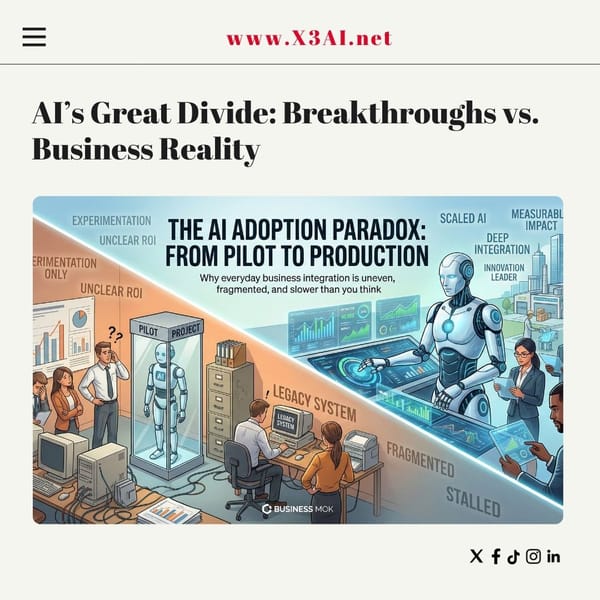
Corporate Finance’s AI Paradox: Urgent Hype, Reluctant Adoption
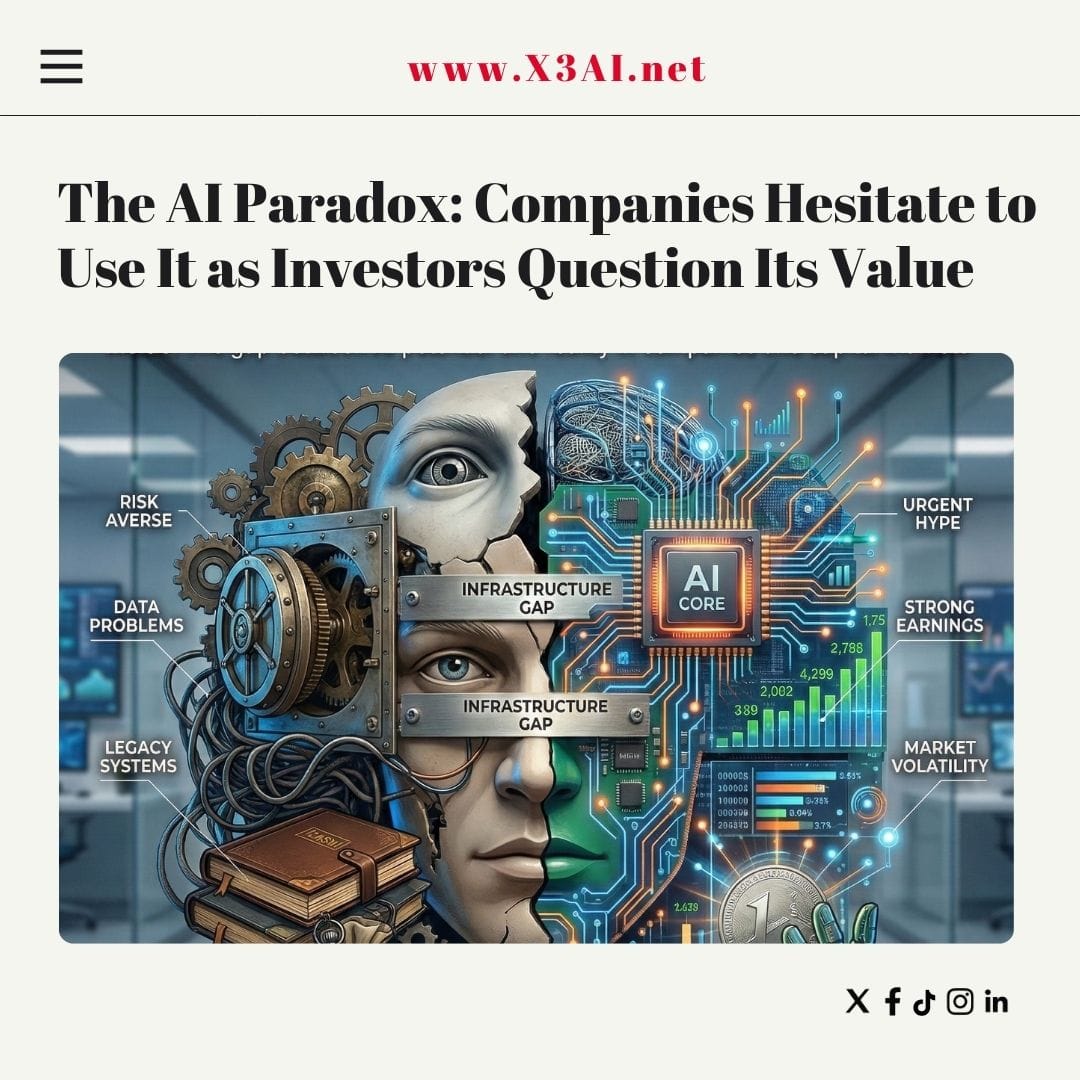
While executives proclaim artificial intelligence as the future of finance, the departments that manage corporate cash, risk, and liquidity are moving at a far slower pace. Treasury teams — arguably the most risk-sensitive units in any company — remain cautious, constrained by data problems, legacy systems, and regulatory exposure.
Recent surveys show that roughly half of large global companies have yet to meaningfully deploy AI in treasury, and those that have are mostly experimenting with basic automation rather than transformative use cases. (Flow)
The core obstacle isn’t a lack of interest — it’s infrastructure.
Data: The Missing Fuel
AI systems depend on clean, integrated, high-quality data — something many corporate finance functions simply do not have. Fragmented systems, incompatible formats, and outdated platforms create unreliable inputs and therefore unreliable outputs.
- Fewer than 1 in 10 treasury teams use AI for core tasks such as forecasting or fraud detection (techinasia.com)
- 57% of treasury leaders report lacking a single consistent data source (AInvest)
- Data quality is cited as the top barrier to scaling AI across finance (AInvest)
Organizations eager to appear technologically advanced are often investing in AI tools before building the underlying data architecture — a sequencing mistake that limits returns. (greenwich.com)
Skills, Governance, and Risk Aversion
Finance leaders are also wary of introducing opaque systems into processes that demand accuracy, compliance, and auditability. Surveys of CFOs highlight persistent obstacles:
- Limited technical skills and data literacy
- Concerns about privacy, regulation, and reputational risk
- Uncertainty about how to move from pilots to production
These factors have slowed adoption despite rising confidence in AI’s long-term benefits. (cfodive.com)
Regulators share these concerns. Central banks warn that widespread AI use in finance could introduce systemic risks, from model failures to herd behavior and cyber vulnerabilities. (Reuters)
In short, treasury departments are behaving exactly as designed: conservative, defensive, and risk-focused.
Wall Street’s Contradiction: Strong AI Earnings, Weak Stock Reactions
While corporate finance hesitates to deploy AI internally, capital markets are struggling with a different paradox — companies delivering spectacular AI-driven results are not always rewarded with rising share prices.
The clearest example is semiconductor giant Nvidia.
Despite reporting record revenues and bullish forecasts, Nvidia’s shares fell sharply, wiping out hundreds of billions in market value in a single day. (Barron's)
Analysts attribute the disconnect to several factors:
1) Sustainability Concerns
Investors question whether the explosive spending on AI infrastructure — projected to reach hundreds of billions — can continue indefinitely. (Financial Times)
2) Concentration Risk
A large portion of AI chip demand comes from a handful of hyperscale tech companies. Heavy reliance on a few customers makes future growth appear fragile. (Investopedia)
3) Valuation Fatigue
Even after strong results, markets worry that AI stocks may already price in years of future growth. This has triggered what some analysts call an “AI scare trade,” rotating money into less AI-exposed sectors. (Investing.com)
4) Law of Large Numbers
As mega-cap firms become enormous, sustaining rapid growth becomes mathematically harder — even when business performance remains strong. (Investopedia)
The result: booming fundamentals paired with hesitant investors.
The Emerging Reality: AI Adoption Is a Marathon, Not a Sprint
Across both corporate finance departments and equity markets, the same underlying theme is emerging — AI’s transformative potential is clear, but its implementation is messy, expensive, and slow.
Inside companies:
- Legacy infrastructure must be rebuilt
- Data governance must be strengthened
- Skills gaps must be addressed
- Risk controls must evolve
In markets:
- Expectations may have run ahead of practical results
- Investors are recalibrating timelines
- Capital is rotating toward proven earnings rather than future promises
Some experts argue that slow adoption in treasury is not failure but a sign of disciplined implementation — groundwork that could enable a larger wave of productivity gains later. (AInvest)
Bottom Line
AI is simultaneously overhyped in markets and under-deployed inside corporations.
Treasury teams hesitate because errors can move billions of dollars. Investors hesitate because valuations already assume perfection. The gap between potential and realized value is producing volatility on both sides of the balance sheet.
The most likely outcome is not an AI bust — but a long execution phase in which infrastructure, regulation, and trust catch up to the technology.