AI Chip Security and Geopolitics: Nvidia’s Tracking Tech Amid Export Pressure
As geopolitical tensions around artificial intelligence hardware intensify, Nvidia—the dominant provider of advanced AI accelerators—is deploying new technical and strategic measures to address export controls, smuggling risks, and regulatory scrutiny. The company’s initiatives underscore how crucial AI silicon has become to national security and global competition.
Nvidia’s Chip Location Tracking Software
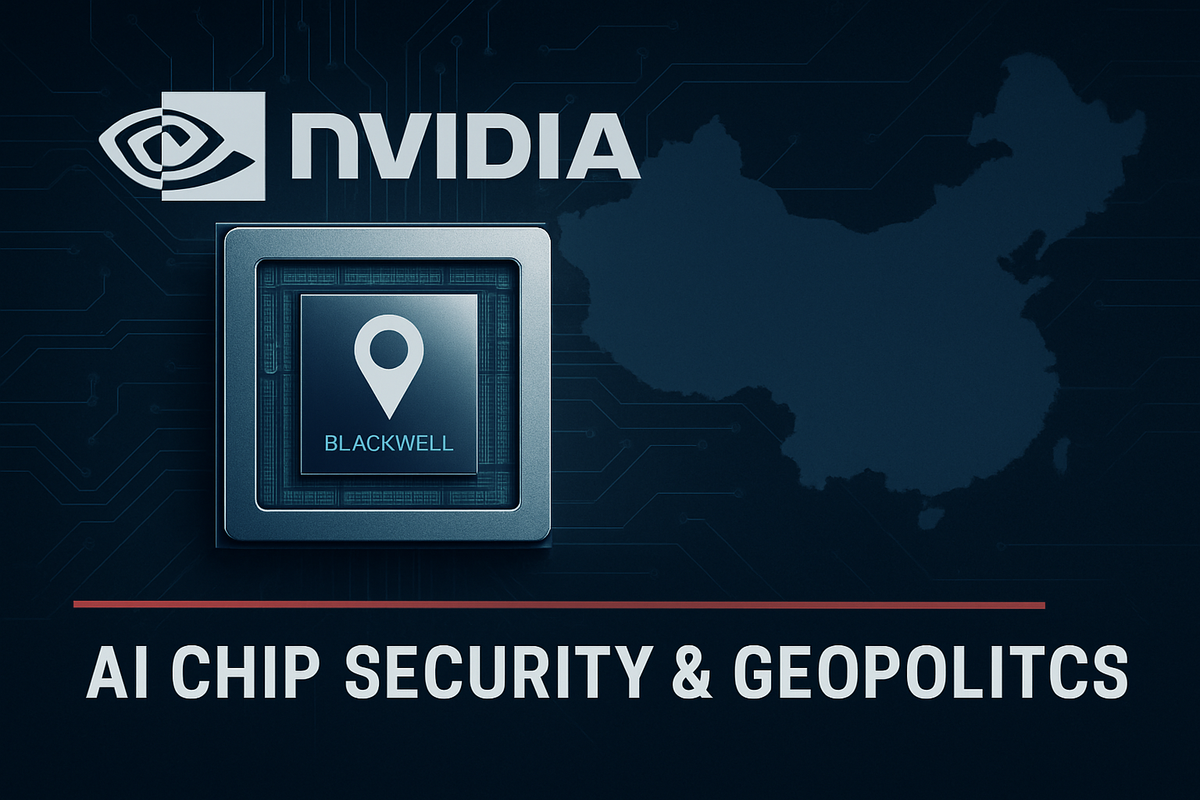
Recent reporting reveals that Nvidia is developing software to help data center customers verify where their AI chips are physically operating, with the first rollout planned for its latest Blackwell generation GPUs. The tool uses confidential computing features and network latency measurements to estimate which country a chip is in, helping enforce export restrictions by providing a form of location verification with fleet monitoring capabilities. The software is optional and designed to protect customer control and privacy—Nvidia emphasizes it cannot remotely disable chips (“no kill switch”) and will be offered as a read-only telemetry service. Reuters+1
According to industry sources, this capability builds on features already used by data centers to monitor performance, health, and inventory across large GPU installations, adapting them to satisfy increasing legal and compliance demands. By correlating telemetry with communication delays to Nvidia’s infrastructure, the company can infer approximate location without invasive tracking. MLQ
Export Controls and Smuggling Concerns
The backdrop for this development is a tightening regime of U.S. export controls on advanced computing hardware—especially high-end AI processors whose computational power could significantly accelerate sensitive AI development. These controls aim to limit the transfer of such capabilities to competitors and potential adversaries, most notably China. Wikipedia
Despite controls, authorities have uncovered complex smuggling schemes involving sophisticated routing of restricted chips into China and other restricted regions. A recent case dubbed Operation Gatekeeper saw more than $160 million worth of Nvidia hardware illegally exported using shell companies and mislabeling. The Times of India
Simultaneously, some reports have alleged that startups in China—most prominently AI firm DeepSeek—may have obtained restricted Blackwell hardware through unauthorized channels, though Nvidia has publicly denied seeing credible evidence to support these specific claims. Moneycontrol
Geopolitical and Regulatory Pressure
The geopolitical dynamics surrounding Nvidia’s hardware extend into U.S. political debates. On December 11, 2025, Senator Elizabeth Warren called for Nvidia’s CEO and senior Commerce officials to testify before Congressregarding decisions to approve shipments of certain AI chips to China and the broader implications for national security. The push reflects bipartisan concern about how export policy meshes with strategic competition. Reuters
These political pressures are layered atop broader export control efforts that restrict the sale of top-tier AI silicon to specific regions and require complex licensing and compliance measures. Nvidia’s location verification tool could become a component of future enforcement mechanisms that complement documentation-based export regimes with technical signals of hardware deployment. Wikipedia
Strategic Importance of AI Chip Tracking
Nvidia’s decision to pilot location tracking is significant for several reasons:
1. It reflects the intersection of technology and policy:
Geotracking in hardware goes beyond traditional software compliance tools and enters domain of export enforcement, indicating how deeply AI infrastructure influences global tech policy.
2. It could reshape supply chain and compliance practices:
Optional but powerful telemetry may become industry de-facto standards if regulators and major purchasers adopt tracking as part of certified compliance frameworks, especially for sensitive government and defense use cases.
3. It highlights evolving tensions in U.S.–China technology competition:
Advanced AI silicon is a dual-use strategic asset—fueling civilian AI services while also contributing to broader economic and military capabilities. Technology providers like Nvidia are balancing sales opportunities with regulatory obligations and geopolitical sensitivities.
4. It signals the challenges of global governance for AI infrastructure:
Nvidia’s move underscores a fundamental tension: how do companies support legitimate customer needs and national regulatory goals without eroding trust among international clients? This question sits at the heart of AI, export controls, and global semiconductor supply chains.